vermiculate round icon logo with inspection checkmark, 40x40 vermiculate

Our story

Built to inspect what standard service bays overlook

vermiculate started with a simple observation: the most expensive breakdowns often begin in places no routine checklist reaches. We designed a workshop around finding those problems early — and proving it with photographs.

Why concealed inspection became our foundation

The workshop opened on Southeast Main Street after years of watching drivers pay for major repairs that could have been prevented with a closer look behind engine covers, inside frame channels, and beneath splash shields. Leaks that never reached the ground, hairline cracks on hoses tucked against firewalls, and corroded brake lines hidden inside subframe cavities — these were the patterns that defined our approach before the first bay door opened.

We rejected the idea that a quick visual walkaround qualifies as a thorough inspection. Instead, vermiculate adopted a discipline of deliberate access: every shield removed with purpose, every concealed junction photographed, every finding explained in plain language before a wrench turns on a repair. That philosophy shaped our tooling investments, our technician training paths, and the reporting format we still use today.

Portland's wet climate accelerated our focus on corrosion tracing and underbody moisture retention. Vehicles that looked clean from the driveway often carried hidden rust progression on load-bearing points. We built ultrasonic thickness testing into our standard assessment workflow and paired it with lift-height photography so owners could see what our technicians see — not after a failure, but while there is still time to act.

A facility designed for access, not speed

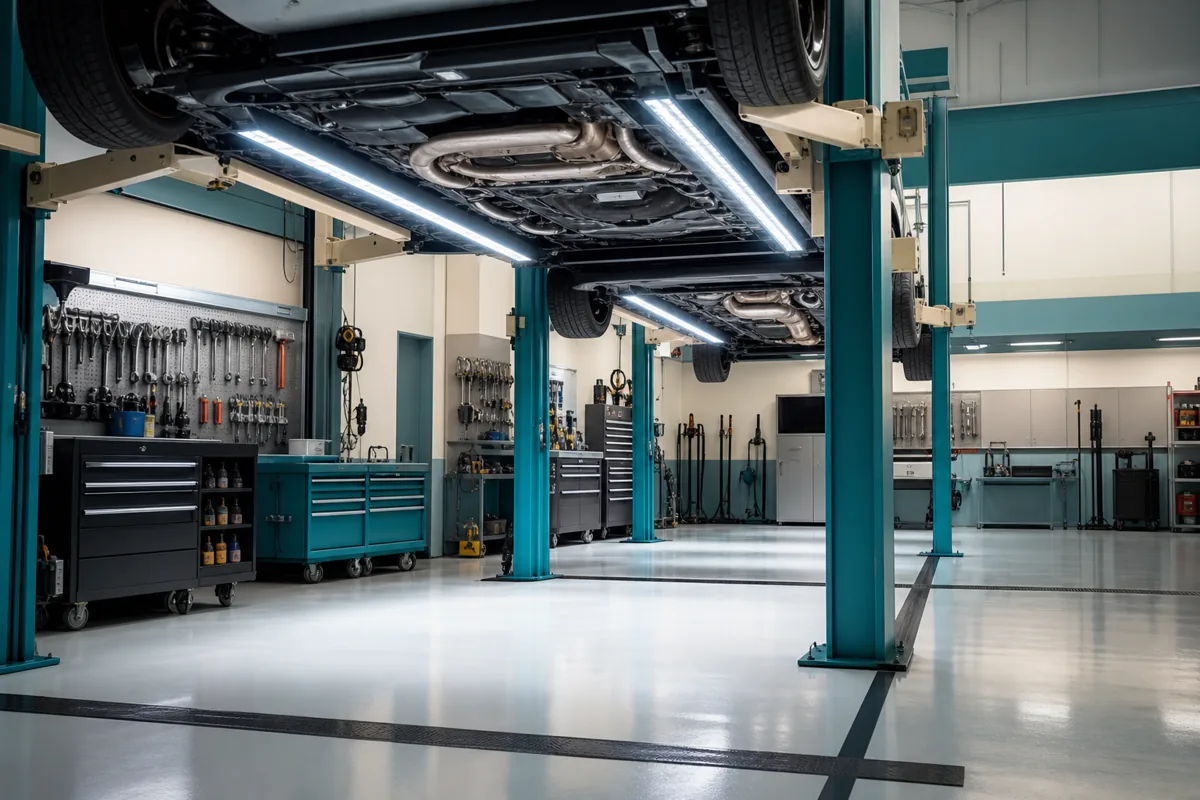
Our twelve lift-equipped bays prioritize working height and lighting over throughput volume. Each bay includes adjustable LED arrays aimed at underbody cavities, dedicated borescope stations, and mobile camera rigs for documenting defects at awkward angles. Technicians are not rushed through a conveyor — they are given the space to remove panels methodically and reassemble them to factory torque specifications.

The inspection lane operates separately from active repair bays so diagnostic findings can be reviewed with owners before commitment. A climate-controlled documentation desk handles photo report assembly, severity tagging, and repair scope drafting. This separation keeps evidence collection independent from sales pressure and gives drivers time to understand what was found.

12 inspection bays
Full-height lifts with underbody lighting arrays
Dedicated borescope lab
Multi-diameter probes for engine and frame access
Photo report station
Timestamped defect documentation on every job
Ultrasonic testing bench
Metal thickness verification for structural zones
Interior of vermiculate automotive workshop showing lift bays with underbody lighting and inspection equipment, 1200x800

Principles that guide every inspection

These standards apply whether we are tracing a seepage point behind a valve cover or assessing corrosion on a frame rail — no exceptions, no shortcuts.

A

Access before assumption

We do not diagnose concealed components from symptoms alone. A noise, a smell, or a fluid trace triggers a mapped access plan — panels come off, shields lift, and routing paths are traced physically. Assumptions cost owners money; verified findings do not.

B

Evidence over explanation

Every significant finding ships with photographs, location labels, and severity notes. Owners receive a visual record they can review at their own pace, share with a second opinion if desired, and keep for future service history. Words describe; images prove.

C

Repair only what inspection confirms

Authorization follows documentation, never the reverse. If a concealed zone checks out clean, we say so and show the photos. If wear is present but not yet critical, we explain the timeline so owners can plan rather than panic. Trust grows when recommendations match visible evidence.

Collaborations that extend our reach

vermiculate maintains active relationships with regional training bodies and diagnostic data providers so our technicians work with current specifications, not outdated assumptions.

Pacific Northwest Automotive Diagnostics Network

Shared borescope protocols and cross-shop case review for intermittent concealed faults.

National Workshop Reference Alliance

OEM torque specs, routing diagrams, and TSB access for accurate reassembly after panel removal.

Cascade Technical Training Institute

Continuing certification for ultrasonic testing and structural corrosion assessment methods.

Willamette Fleet Maintenance Council

Photo-report standards development for commercial vehicles with concealed routing damage.

How we define a complete hidden-zone assessment

A complete assessment at vermiculate covers more than the complaint that brought the vehicle in. Technicians follow a zone map that includes underbody fluid routing, engine bay periphery behind covers, suspension cavity hardware, and structural points prone to moisture retention. Each zone receives a pass-or-document result — nothing is marked clear without visual confirmation.

Reports are delivered in a structured format: vehicle identification, inspection date, technician name, zone-by-zone findings with images, severity classification, and recommended action windows. Critical items are flagged for immediate attention; monitor-stage items include re-check intervals so owners know when to return.

"The best repair is the one you never need because someone looked early enough to catch the wear before it spread."

— Workshop founding principle
Technician reviewing a hidden-zone inspection photo report with a vehicle owner at the workshop desk, 1200x800

Have questions about our inspection process?

Our team responds to every inquiry with a clear explanation of what a hidden-zone assessment includes, typical access requirements for your vehicle type, and how photo reports are delivered. No obligation — just straightforward answers.

Contact us

Explore our technical articles

Our specialists publish detailed guides on concealed component failures, inspection techniques, and repair considerations — written for vehicle owners who want to understand what happens behind the panels.

Important information

vermiculate provides knowledge about automotive repair, maintenance, and hidden-zone inspection services. The information on this website is intended to help vehicle owners understand available workshop options, general service practices, and common repair considerations. Website content does not replace a professional in-person inspection of your specific vehicle.

Service recommendations, diagnostic findings, repair timelines, and parts availability may vary depending on vehicle make, model, production year, mileage, prior maintenance history, and driving conditions. Any repair or maintenance decision should be made after consultation with a qualified automotive technician following a thorough physical evaluation.

vermiculate provides consultation and automotive repair services in accordance with applicable local regulations. We do not guarantee identical outcomes for every repair, as results depend on component wear, environmental factors, and usage patterns. Previous service results on other vehicles do not guarantee the same outcome for future work on your car.

By using this website and submitting inquiries through our contact forms, you acknowledge that general website content relates to our services and informational materials. For vehicle-specific guidance, schedule a direct consultation with our team or visit our workshop location in Portland, Oregon.