How corrosion develops on brake lines you cannot see from above
Frame-channel routing protects brake hard lines from impact — but traps moisture against the metal. By the time fluid appears on a garage floor, the line wall may already be critically thin.
Why frame channels accelerate corrosion
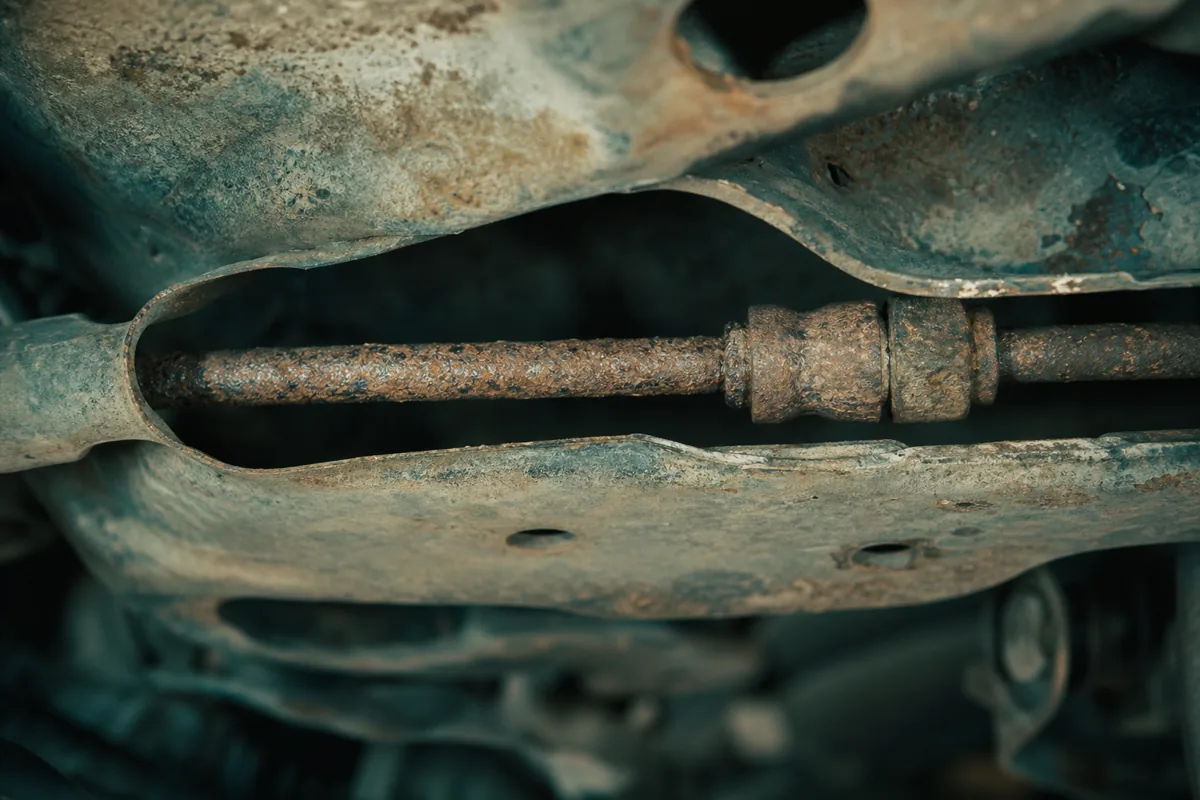
Manufacturers route steel brake lines through closed or semi-closed frame sections to keep them away from stones and road debris. That design choice also creates a pocket where road salt, water, and grit collect and stay in contact with the line for months. From a standing visual inspection, the outer frame looks fine while the line surface inside the channel is actively pitting.
Pacific Northwest driving patterns — wet winters, gravel roads, and frequent temperature swings — push this failure mode faster than dry-climate wear. The corrosion is chemical and mechanical at once: salt attacks the coating while trapped grit abrades whatever protection remains.
Early signs before a visible leak
- Soft or slowly sinking brake pedal after the vehicle sits overnight — air may be entering through a seeping flare joint before fluid loss becomes obvious
- Green or white powder around a clip or bracket seen from below, even without drips
- Uneven pad wear on one corner without caliper slide binding — pressure imbalance from a partially restricted line
- ABS activation at low speed on dry pavement — sometimes traced to erratic wheel speed from intermittent hydraulic pressure loss
None of these symptoms alone proves a concealed line is failing, but together they justify removing shields and inspecting routing rather than replacing pads or sensors first.
Flare joints and seepage points
Double-flared connections are common failure points because moisture wicks into the mating face between the flare and fitting. A joint can weep slowly enough that fluid evaporates before it drips, leaving only a dark stain or crusted salt deposit. Tightening the fitting rarely fixes corrosion at the flare face — it often cracks the already-thinned line.
During hidden-zone brake inspections, we photograph each flare from multiple angles with the line still mounted. That documents whether seepage is active and whether the line wall below the flare shows pitting or bulging from internal rust.
Inspection sequence for concealed routing
- Raise the vehicle and remove splash shields or skid plates that block line visibility
- Follow each hard line from master cylinder to wheel cylinder or caliper, noting clip locations and contact points
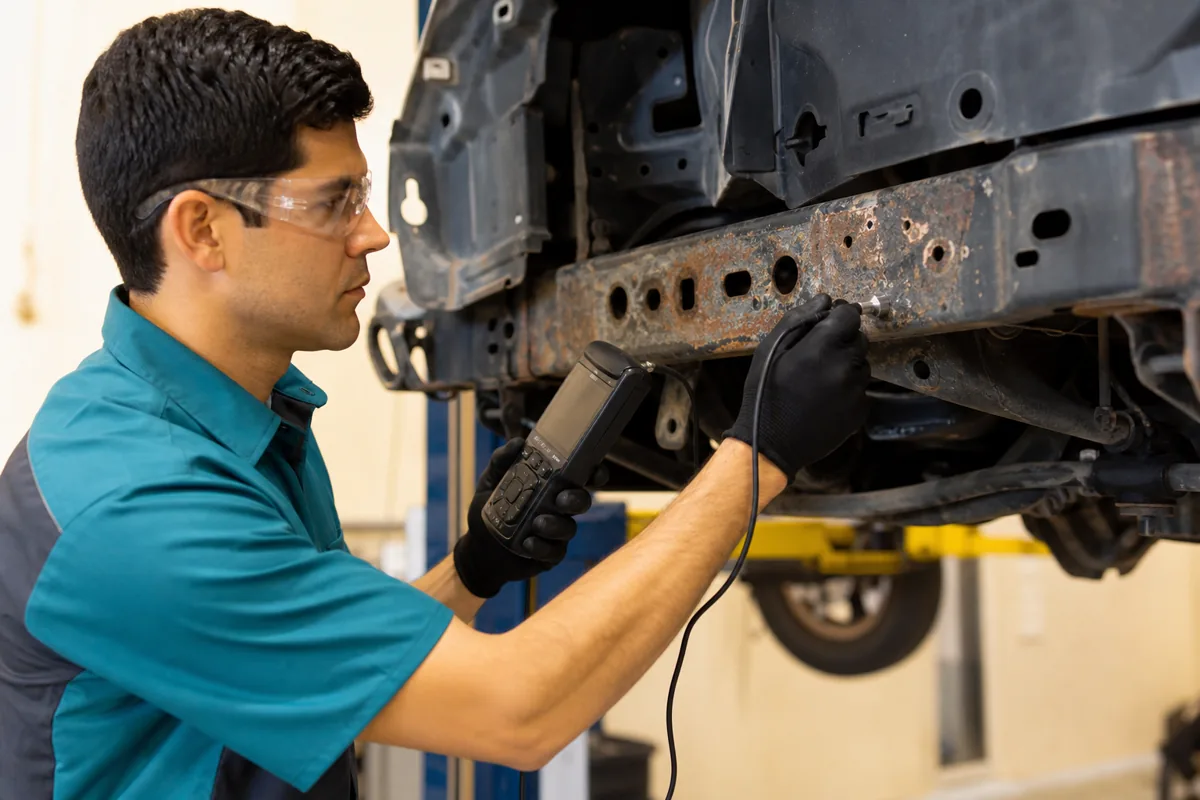
- Probe channel sections with a borescope or mirror where direct sight is blocked
- Check flex hose transitions for corrosion where steel meets rubber — a common capillary point for moisture
- Pressure-test the hydraulic system and inspect joints while pressure is held
- Document wall thickness concerns and recommend section replacement with proper routing and clips
Partial line replacement requires matching flare type, tube diameter, and bend geometry. Pre-bent kits help on common platforms, but custom bending with double-flare tooling is often necessary when only one channel section is compromised.
What owners can do between inspections
Regular underbody rinsing during winter reduces salt accumulation, but high-pressure spraying directly at line clips can force water into channel openings. A low-pressure rinse and periodic professional underbody inspection is more effective than aggressive DIY cleaning that drives moisture into concealed paths.
If a shop recommends brake fluid service, ask whether hard lines were inspected at the same time. Fluid freshness does not protect a corroded steel wall from rupture under emergency braking pressure.